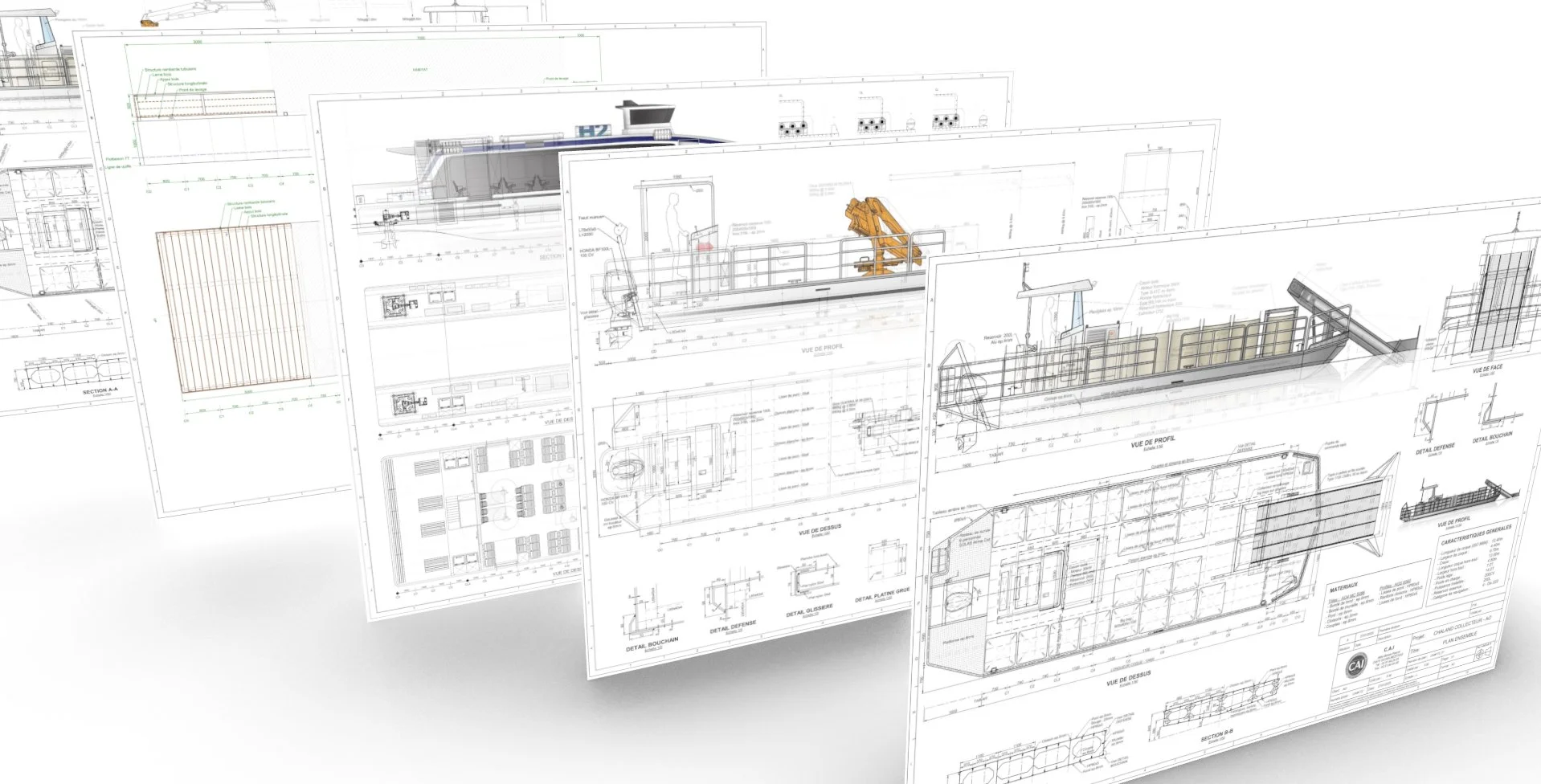
Naval Architecture: From Feasibility to Compliance
Preliminary draft
Whether it’s a new build or a refit, the preliminary design phase allows us to confirm technical feasibility, guide key design decisions, and establish initial cost estimates.
Conducting architectural, technical, regulatory, and budgetary feasibility studies
Preparation of technical proposals for requests for proposals
Conducting project cost estimates
Naval architecture
Ship design is an iterative process that incorporates operational, performance, and layout constraints. Space allocation, hull form definition, sizing, and the selection of equipment and systems: every decision contributes to an overall balance.
Development of the space layout (general arrangement, machinery arrangement, etc.)
Definition of hull shapes
Preparation of cost estimates
Preparation of regulatory stability dossiers and verification of stability criteria
Performance Estimation and Selection of the Powertrain
Conducting structural studies and verifying the sampling
Definition of major equipment and system diagrams
Regulatory Compliance
Regulatory compliance is a central focus of the project. The requirements of flag states and classification societies establish a strict framework that ensures safety and seaworthiness.
Conducting a regulatory compliance review
Preparation of regulatory files (plans and documents: freeboard, overboard falls, safety, etc.)
Writing user manuals